ADHD Across the Lifespan: Understanding Challenges, Recognizing Strengths
Adapted from Dr. Marcia Morrison’s Community Mental Wellness Educational Series brochure.
Understanding ADHD
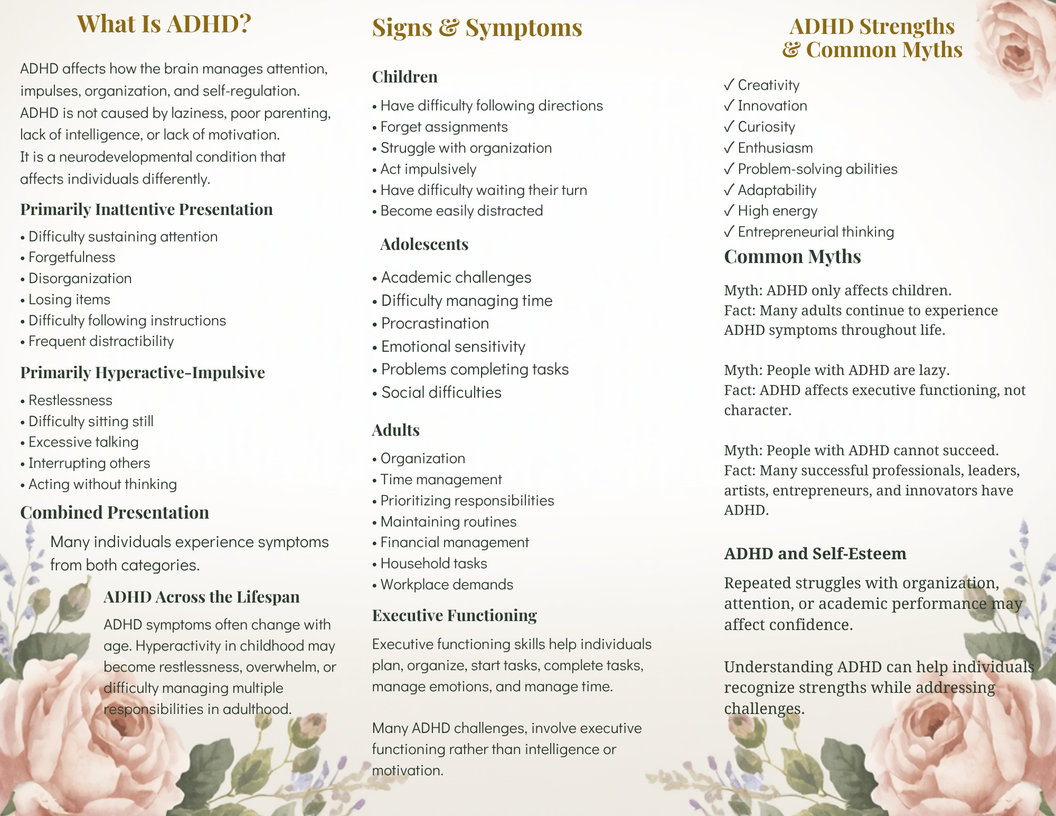
Attention-deficit/hyperactivity disorder (ADHD) can affect attention, activity level, and impulse control. It may also make everyday tasks such as getting organized and following through on plans more difficult. ADHD begins in childhood and can continue into adult life.
Understanding these experiences creates room for support, rather than blame. ADHD is not a measure of a person’s intelligence or worth.
How challenges can change with age
For a child, difficulties may become noticeable when following directions, waiting for a turn, or keeping track of school assignments. During adolescence, increasing academic and social demands can make planning and managing responsibilities more challenging.
Adults may notice difficulties organizing work, managing time, or keeping up with household responsibilities. Hyperactivity can feel like inner restlessness. These experiences vary from person to person; a list of symptoms alone cannot establish a diagnosis.
Make daily tasks more manageable
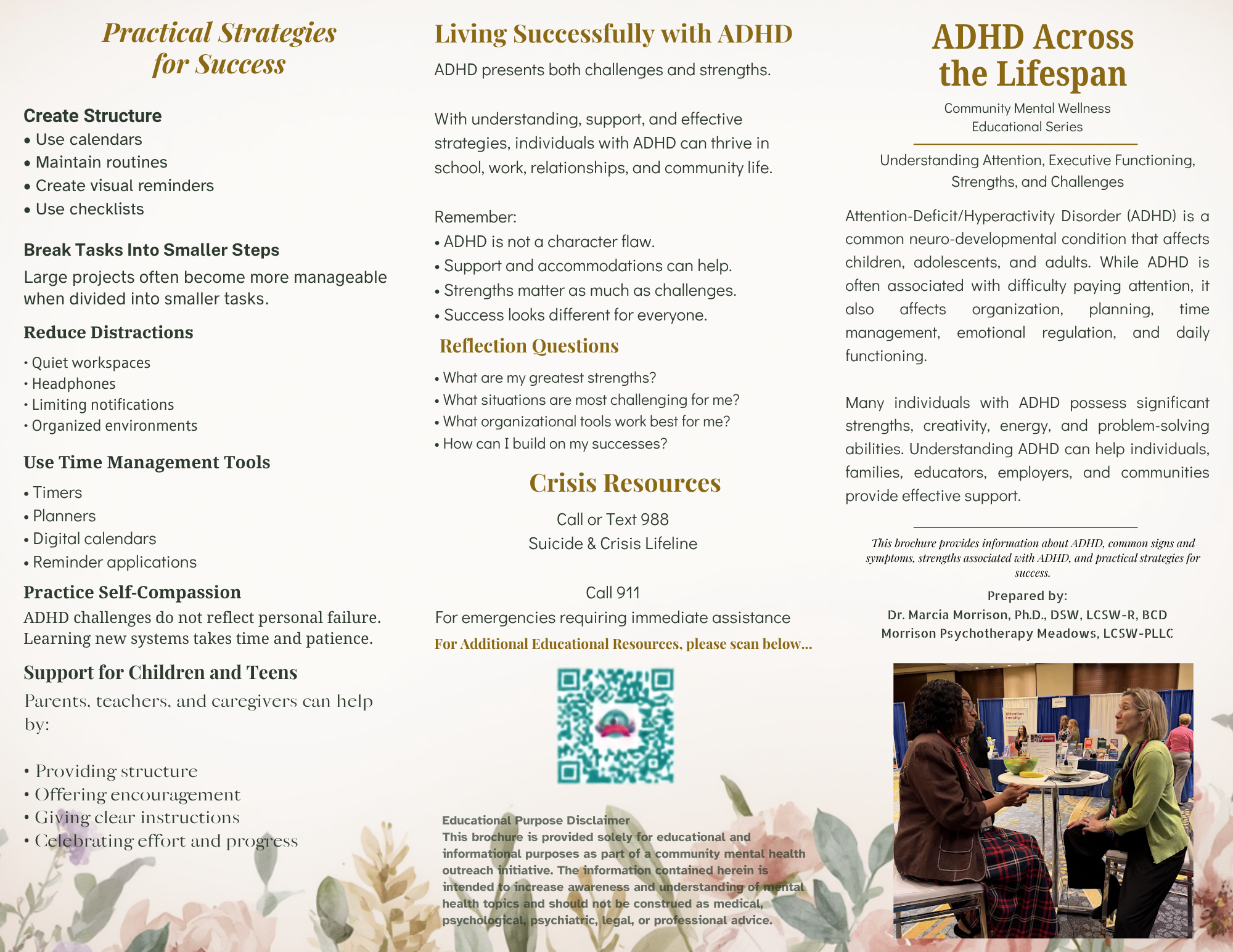
The practical strategies in the brochure offer a starting point for building routines that fit your life. Try one small change, notice what helps, and adjust as needed.
- Create structure. Use a calendar, a short checklist, or a visible reminder for an important task.
- Break a project into smaller steps. Identify the first action you can take instead of holding the entire project in your mind.
- Reduce distractions. Consider a quieter workspace, fewer notifications, or a clearer work surface.
- Make time visible. A timer, planner, or reminder application may help you start a task or prepare for a transition.
- Practice self-compassion. Learning a new system takes time. A difficult day does not erase your effort or progress.
Support children and teenagers with encouragement
Parents, teachers, and caregivers can offer clear instructions, predictable routines, and encouragement. Celebrate effort and progress. Ask what kind of reminder or structure feels helpful, and work together on manageable expectations.
Support works best when it is adapted to the individual, rather than based on comparisons with other children or family members.
See the whole person
The brochure invites readers to recognize strengths as well as difficulties. A person may bring creativity, curiosity, enthusiasm, or problem-solving abilities to their relationships and work. These qualities are individual strengths, not traits every person with ADHD must possess.
Repeated struggles can affect confidence. A more compassionate question is: “What support would help me use my abilities?”
Questions for reflection
- What are my greatest strengths?
- Which situations feel most challenging?
- What organizational tools have helped me before?
- What is one small change I could try this week?
- How can I recognize progress without expecting perfection?
When to seek an assessment
If attention, restlessness, or organization difficulties persist and interfere with daily life, discuss them with a qualified health professional. An assessment considers the history of symptoms and other possible explanations. Treatment may include medication, psychotherapy, behavioral approaches, or a combination, tailored to the person’s needs.
Keep the brochure nearby
Download the original two-page brochure below for its practical reminders and reflection questions. You can also download each side separately.
This article provides general education and does not replace an individualized assessment, diagnosis, or treatment.